






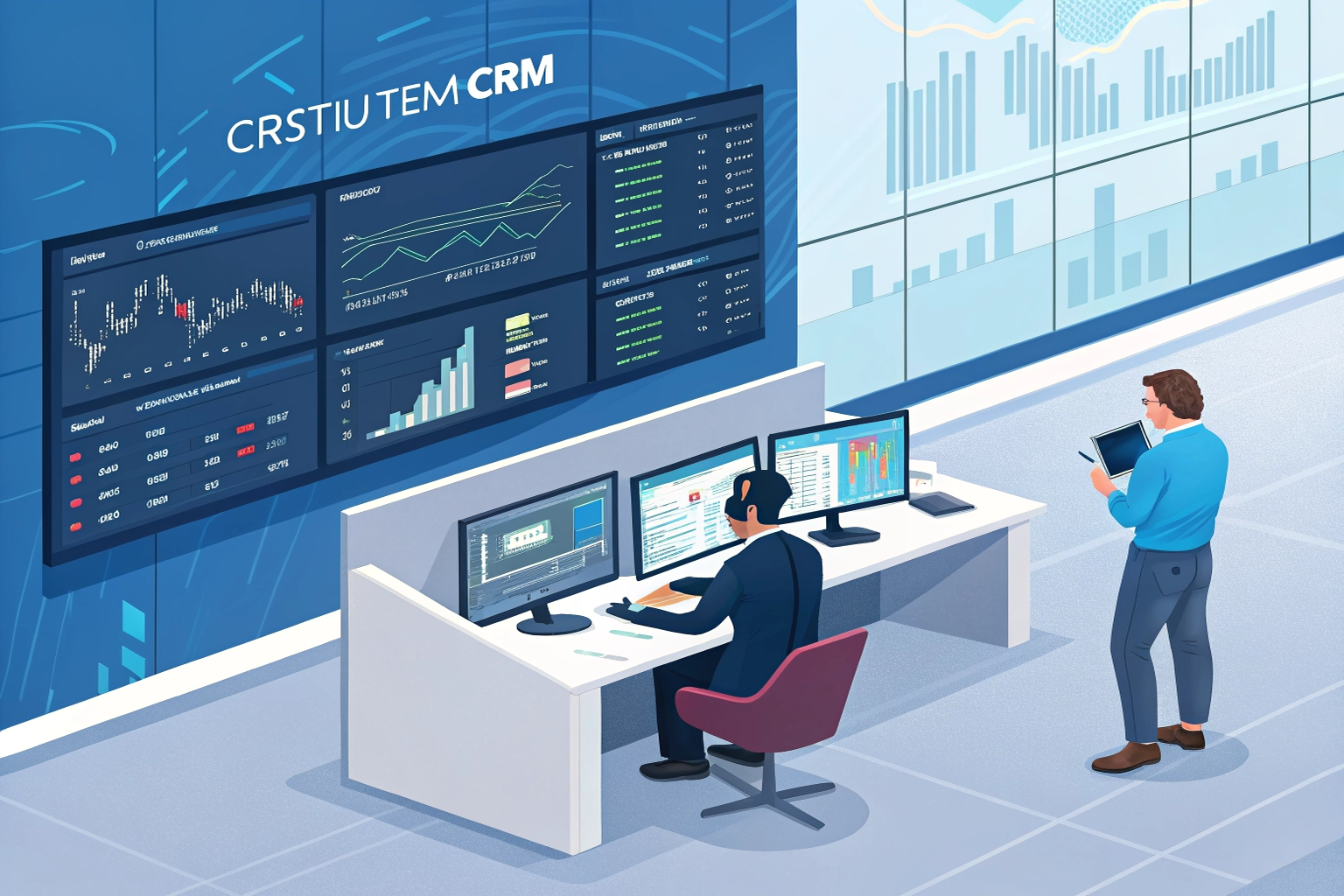
The forex brokerage industry has become more competitive than ever. Launching a brokerage today requires far more than providing traders with access to popular trading platforms like MetaTrader 4 (MT4) or MetaTrader 5 (MT5). Modern brokerages must deliver a seamless client experience, comply with strict regulatory requirements, automate repetitive operations, and maintain strong relationships with clients, Introducing Brokers (IBs), and affiliates.
At the center of these operations is a Forex Broker CRM.
A Forex Broker CRM is much more than a traditional customer relationship management system. It is a specialized platform designed specifically for forex and CFD brokerages. It combines client onboarding, lead management, compliance, payment processing, trading platform integration, reporting, automation, and communication into a single ecosystem.
Without a robust CRM, brokerages often struggle with fragmented workflows, manual data entry, compliance risks, delayed client onboarding, and poor customer retention. As trading volumes increase, these operational challenges can significantly impact growth and profitability.
Today’s leading brokerages rely on intelligent CRM platforms that automate routine tasks, reduce operational costs, improve regulatory compliance, and provide valuable business insights through real-time analytics.
Whether you are launching your first brokerage or upgrading your existing technology stack, selecting the right CRM can influence nearly every aspect of your business, including client acquisition, retention, compliance, operational efficiency, and long-term scalability.
This guide explores the ten essential features every modern Forex Broker CRM should include in 2026. You’ll also discover additional capabilities that distinguish enterprise-grade CRM platforms from basic solutions, along with practical tips to help you evaluate different providers before making a decision.
Key Takeaways
- A Forex Broker CRM centralizes sales, compliance, client management, payments, and trading operations.
- The best CRM platforms integrate seamlessly with MT4, MT5, cTrader, and other trading systems.
- Automation reduces manual work, accelerates onboarding, and improves operational efficiency.
- Built-in KYC and AML tools help brokerages meet global regulatory requirements.
- Advanced reporting and analytics support smarter business decisions.
- IB and affiliate management tools help increase client acquisition.
- AI-powered automation is becoming a key differentiator for modern brokerages.
- Scalability and API integrations ensure the CRM can grow with your brokerage.
Why Every Forex Brokerage Needs a Specialized CRM
Many new brokers initially attempt to manage clients using spreadsheets, generic CRM software, and separate compliance tools. While this approach may work with a small client base, it quickly becomes inefficient as the brokerage grows.
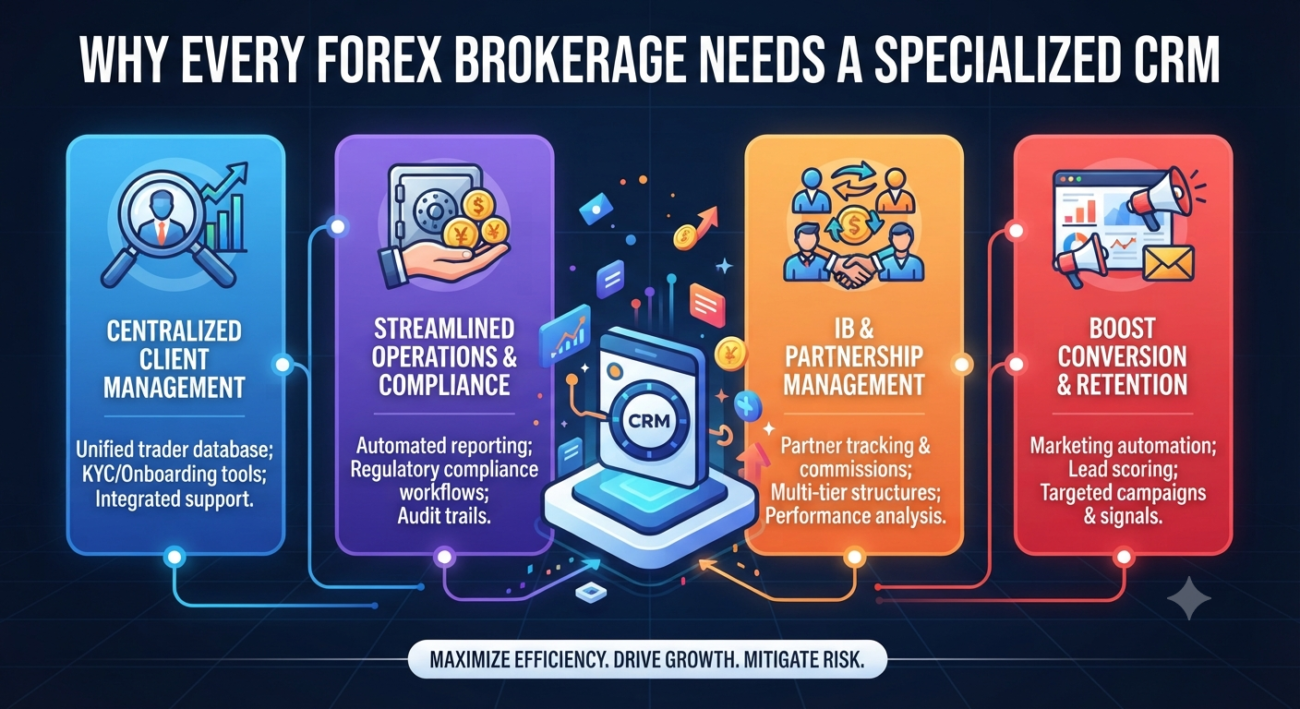
Unlike traditional CRM platforms used by general businesses, a Forex Broker CRM is built specifically for the trading industry. It connects every department within the brokerage, creating a unified operational environment.
Instead of switching between multiple systems, employees can manage the complete client lifecycle from one dashboard.
A specialized Forex Broker CRM typically handles:
- Lead capture and qualification
- Client onboarding
- Identity verification (KYC)
- AML compliance
- Account approvals
- MT4 and MT5 account creation
- Deposit and withdrawal management
- Client communication
- Introducing Broker management
- Affiliate tracking
- Sales pipeline management
- Customer support
- Analytics and reporting
- Risk monitoring
- Marketing automation
This unified approach improves efficiency, reduces operational costs, minimizes errors, and enhances the client experience.
What Makes a Great Forex Broker CRM?
Not every CRM marketed to forex brokers offers the same capabilities. Some platforms focus primarily on lead management, while others provide a complete brokerage ecosystem that integrates front-office, middle-office, and back-office operations.
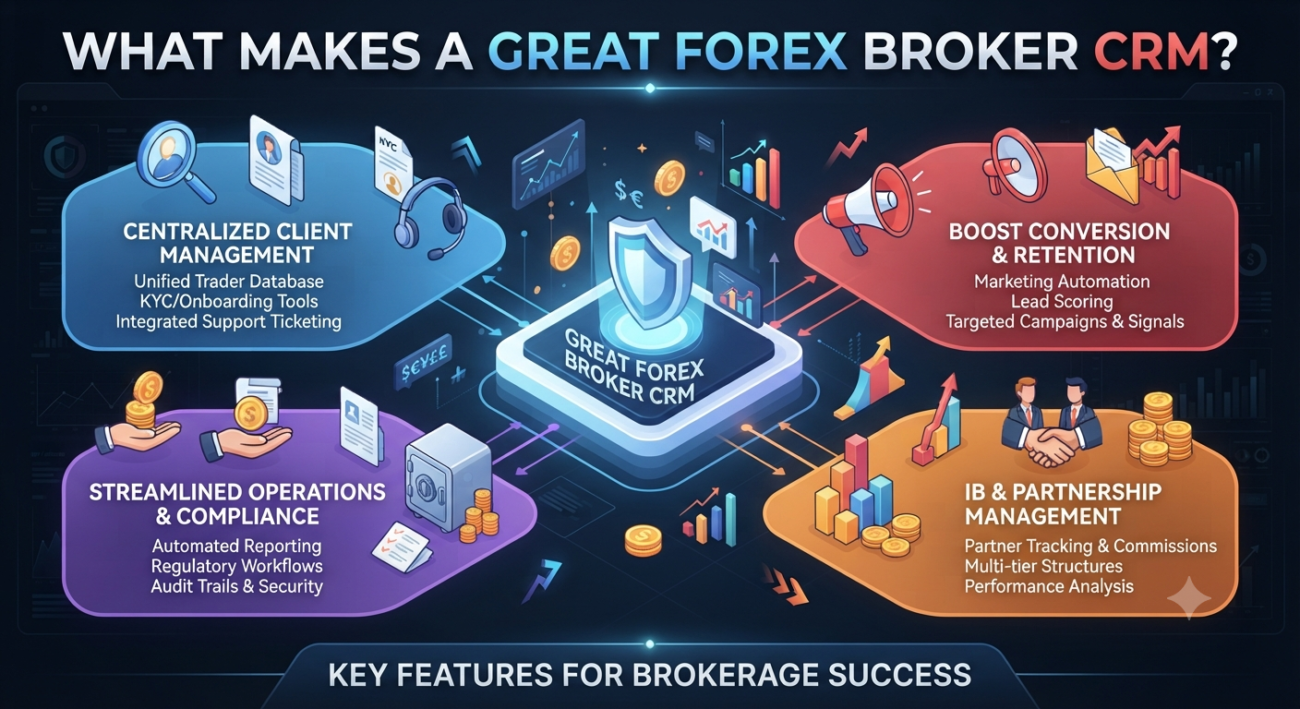
When evaluating a Forex Broker CRM, brokers should consider several key factors:
| Evaluation Factor | Why It Matters |
| Industry-Specific Features | Supports trading operations instead of generic sales workflows. |
| Automation | Reduces manual work and improves efficiency. |
| Regulatory Compliance | Helps meet KYC, AML, and jurisdictional requirements. |
| Trading Platform Integration | Connects seamlessly with MT4, MT5, cTrader, and liquidity providers. |
| Reporting | Provides real-time business intelligence. |
| Security | Protects sensitive client and financial data. |
| Scalability | Supports future business growth without major system changes. |
| API Availability | Enables integration with payment gateways, marketing tools, and custom applications. |
A well-designed CRM becomes the operational backbone of a brokerage, enabling teams to work faster, make better decisions, and deliver a more professional client experience.
| Feature | Business Impact |
| Lead Management | Higher Conversions |
| MT4/MT5 Integration | Faster Account Opening |
| KYC & AML | Regulatory Compliance |
| IB Management | More Client Acquisition |
| Payment Integration | Faster Deposits & Withdrawals |
| Reporting | Better Business Decisions |
| AI Automation | Reduced Manual Work |
| Multi-Language Support | Global Expansion |
| API Integrations | Future Scalability |
| Security | Data Protection |
Feature #1: Advanced Client & Lead Management
Every successful brokerage begins with effective lead management. Generating leads is only the first step; converting them into funded trading accounts requires a structured, data-driven process.

An advanced Forex Broker CRM should provide a complete lead management system that captures prospects from multiple sources, tracks every interaction, and helps sales teams prioritize high-value opportunities.
Why It Matters
Without a centralized lead management system, valuable prospects can be overlooked, follow-ups may be delayed, and conversion rates can decline. A CRM ensures every lead progresses through a consistent sales journey.
Essential Capabilities
- Multi-channel lead capture (website forms, landing pages, paid ads, referrals)
- Automated lead assignment
- Custom sales pipelines
- Lead scoring and prioritization
- Activity timelines
- Email, SMS, and WhatsApp communication history
- Follow-up reminders
- Sales performance tracking
- Duplicate lead detection
- Custom tags and segmentation
Business Benefits
| Capability | Benefit |
| Automated Lead Routing | Faster response times and improved sales efficiency |
| Lead Scoring | Focuses sales efforts on high-potential prospects |
| Activity Tracking | Ensures no follow-up opportunities are missed |
| Customer Segmentation | Enables targeted marketing campaigns |
| Conversion Analytics | Helps optimize the sales funnel |
Expert Tip
The highest-performing brokerages often contact qualified leads within the first five minutes of receiving an inquiry. Integrating automated workflows, instant notifications, and AI-assisted lead scoring into your Forex Broker CRM can significantly improve response times and increase conversion rates.
Feature #2: Seamless MT4, MT5 & Multi-Platform Integration
A Forex Broker CRM is only as effective as its ability to integrate with the trading platforms your clients use every day. Whether your brokerage offers MetaTrader 4 (MT4), MetaTrader 5 (MT5), cTrader, or proprietary trading platforms, your CRM should act as the central hub that connects client management with trading operations.

Without native platform integration, teams are forced to manually create trading accounts, update client records, process deposits, and synchronize trading activity. These manual processes increase operational costs, introduce errors, and slow down the client onboarding experience.
A modern Forex Broker CRM eliminates these inefficiencies by synchronizing trading data in real time and automating account management tasks.
Why Trading Platform Integration Matters
When a new client completes registration, the CRM should automatically perform actions such as:
- Create a live or demo trading account
- Assign the appropriate trading server
- Generate secure login credentials
- Link the trading account to the client’s profile
- Send welcome emails with account information
- Notify the sales or onboarding team
- Record every action for audit purposes
This automation reduces delays and ensures a professional onboarding experience.
Essential Integration Features
A robust Forex Broker CRM should support:
- Native MT4 integration
- Native MT5 integration
- Multi-server management
- Multi-platform support
- Automatic account creation
- Real-time balance synchronization
- Open positions monitoring
- Trading history synchronization
- Deposit and withdrawal synchronization
- Margin and equity monitoring
- Internal transfer management
- Trading permissions management
- API connectivity
- WebTrader integration
- Mobile trading compatibility
Business Benefits
| Integration Feature | Business Value |
| Automatic Account Creation | Reduces onboarding time from hours to minutes |
| Real-Time Trading Sync | Keeps client records accurate |
| Multi-Server Support | Simplifies multi-brand operations |
| Trading History Integration | Improves customer support |
| Deposit Synchronization | Faster financial reconciliation |
| API Connectivity | Enables future integrations |
Example Workflow
Instead of manually completing every onboarding step:
Traditional Process
Website Registration → Sales Team Review → Manual Account Creation → Email Credentials → Finance Verification → Trading Access
Automated CRM Workflow
Website Registration → KYC Verification → Automatic MT5 Account Creation → Instant Email & SMS → Payment Verification → Trading Access
The automated workflow significantly reduces delays while improving client satisfaction.
Best Practices
When evaluating CRM providers, ask:
- Does the CRM support both MT4 and MT5?
- Can one client manage multiple trading accounts?
- Does it support multiple liquidity providers?
- Are trading activities synchronized in real time?
- Can trading accounts be created automatically?
- Is API documentation available?
- Does it support future platform integrations?
These questions help determine whether the CRM can scale with your brokerage.
Feature #3: Automated KYC & AML Compliance
Regulatory compliance is one of the most critical responsibilities of any forex brokerage. Every new client must be verified before accessing financial services, and brokerages must comply with Know Your Customer (KYC) and Anti-Money Laundering (AML) requirements in the jurisdictions where they operate.
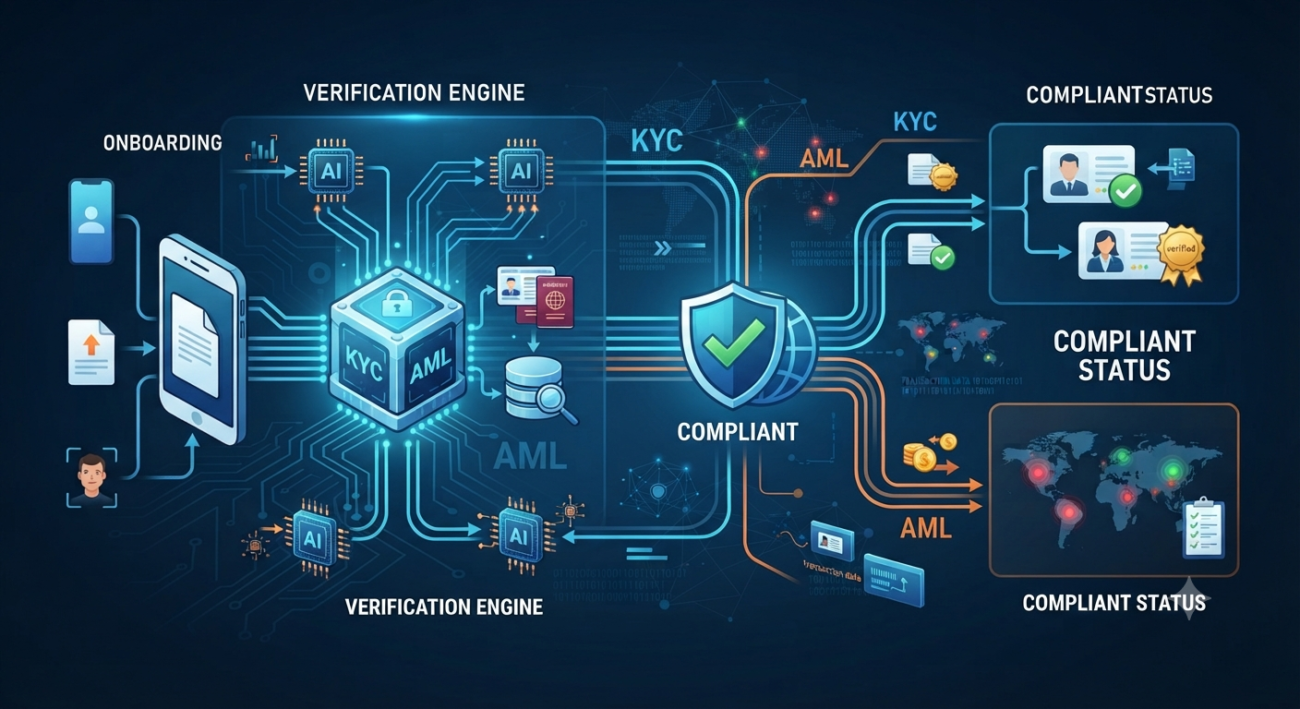
Managing these checks manually is time-consuming and increases the risk of errors, delayed approvals, and regulatory penalties.
A modern Forex Broker CRM streamlines compliance by automating identity verification, document collection, risk assessment, and approval workflows.
Why Compliance Automation Matters
Manual verification often creates bottlenecks. Clients upload documents, support teams review them individually, and approval decisions can take hours or even days.
Automated workflows shorten this process while maintaining compliance standards.
Benefits include:
- Faster client onboarding
- Reduced compliance workload
- Lower operational costs
- Consistent verification procedures
- Better audit readiness
- Reduced fraud risk
Core Compliance Features
Every enterprise-grade Forex Broker CRM should include:
- Digital KYC verification
- Passport verification
- National ID verification
- Driver’s license verification
- Proof of address validation
- Facial recognition
- Liveness detection
- AML screening
- Sanctions screening
- Politically Exposed Person (PEP) checks
- Risk scoring
- Automatic approval workflows
- Manual review queue
- Compliance audit logs
- Secure document storage
Compliance Workflow
A typical automated onboarding process looks like this:
- Client submits registration.
- Identity documents are uploaded.
- Documents are validated automatically.
- AML and sanctions databases are checked.
- Risk score is generated.
- Low-risk clients are approved automatically.
- High-risk cases are routed to the compliance team.
- Trading account is activated after approval.
This structured workflow improves efficiency while maintaining regulatory standards.
Business Benefits
| Compliance Capability | Business Benefit |
| Automated Document Verification | Faster onboarding |
| AML Screening | Reduced financial crime risk |
| Risk Scoring | Better decision-making |
| Audit Logs | Easier regulatory inspections |
| Secure Document Storage | Improved data security |
| Automated Workflows | Lower operational costs |
Common Compliance Mistakes
Many brokerages encounter avoidable issues such as:
- Accepting incomplete documentation
- Manual document tracking
- Delayed approvals
- Missing audit trails
- Weak access controls
- Poor document retention practices
A specialized Forex Broker CRM helps prevent these problems by enforcing standardized compliance procedures.
Feature #4: Introducing Broker (IB) & Affiliate Management
For many brokerages, Introducing Brokers (IBs) and affiliates are among the most valuable acquisition channels. A well-managed partner network can generate a consistent flow of qualified traders while reducing customer acquisition costs.
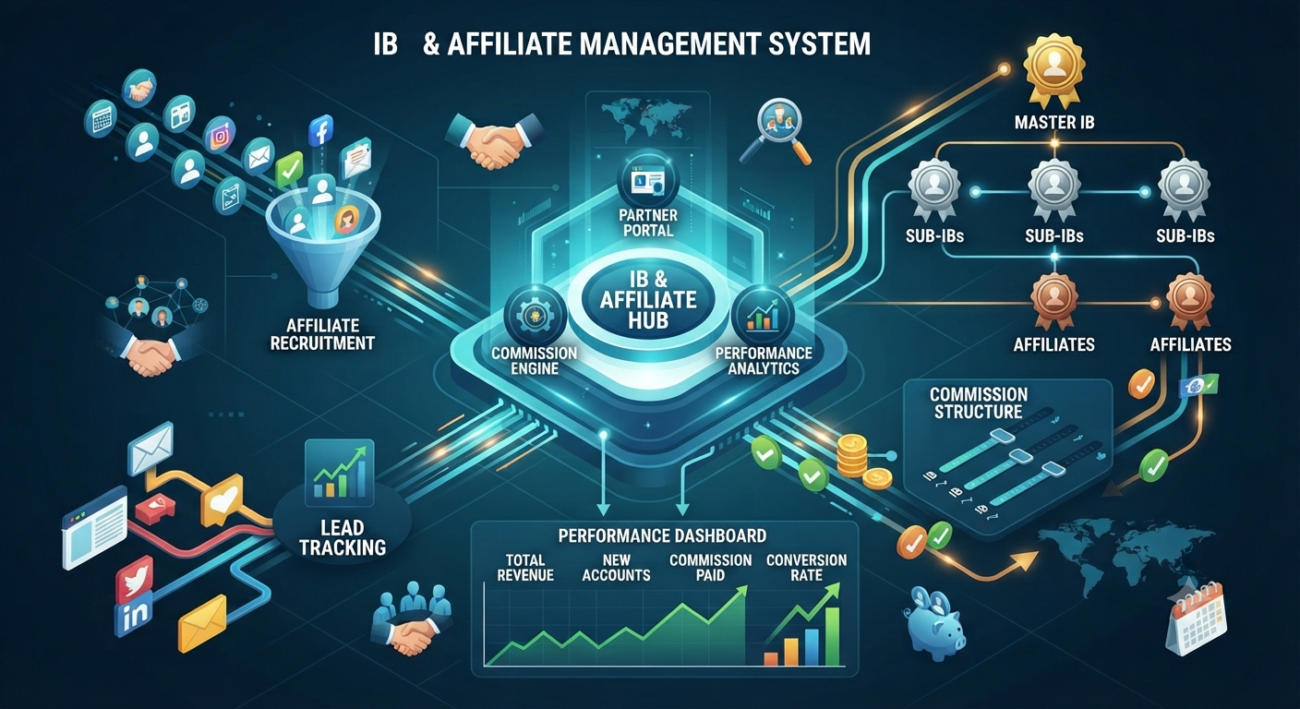
However, managing hundreds or thousands of partners manually can quickly become unmanageable.
An advanced Forex Broker CRM provides dedicated tools to automate partner onboarding, commission tracking, reporting, and payouts.
Why IB Management Is Essential
Introducing Brokers expect transparency, timely commission payments, and access to performance metrics. If your CRM cannot deliver these capabilities, partner satisfaction and retention may suffer.
An integrated IB management module strengthens relationships and improves operational efficiency.
Essential IB Features
Look for a CRM that supports:
- Multi-level IB structures
- Affiliate programs
- Referral links
- Commission calculation
- Revenue sharing
- CPA models
- Hybrid commission models
- Automatic commission payments
- Real-time partner dashboards
- Downline management
- Client tracking
- Trading volume reporting
- Performance analytics
- Marketing resource management
Commission Models Supported
| Model | Description |
| Revenue Share | IB earns a percentage of brokerage revenue |
| CPA | Fixed payment for each qualified client |
| Rebate | Commission based on trading volume |
| Hybrid | Combination of CPA and revenue share |
| Multi-Level | Earnings from sub-IB networks |
Supporting multiple commission models allows your brokerage to attract different types of partners.
Benefits of Automated IB Management
A dedicated partner module helps brokerages:
- Expand client acquisition channels
- Improve commission accuracy
- Reduce manual calculations
- Increase partner satisfaction
- Minimize payment disputes
- Track campaign performance
- Scale affiliate operations efficiently
Questions to Ask CRM Vendors
Before choosing a Forex Broker CRM, ask:
- Does it support unlimited IBs?
- Can commission rules be customized?
- Are payouts automated?
- Does it support CPA, rebate, and hybrid models?
- Can partners access real-time reports?
- Does it integrate with payment systems?
- Is the commission engine flexible enough for future business models?
A strong IB management system can become a significant competitive advantage as your brokerage grows.
Feature #5: Multi-Level User Roles & Permission Management
As a brokerage grows, multiple teams work within the same CRM system, including sales representatives, compliance officers, finance teams, customer support agents, marketing specialists, dealing desk operators, and senior management. Each department requires access to specific information while sensitive client and financial data must remain protected.
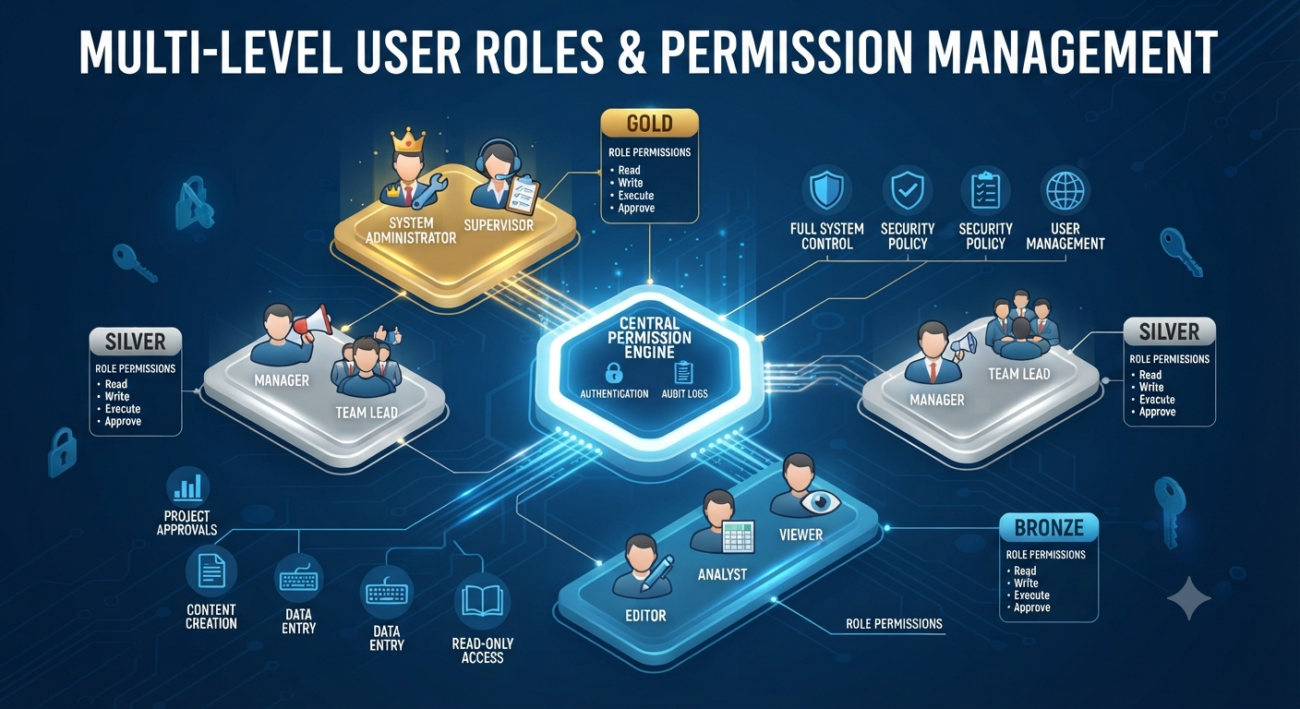
A modern Forex Broker CRM should include a robust role-based access control (RBAC) system that allows administrators to define user permissions based on job responsibilities.
Without proper access controls, employees may accidentally modify sensitive records, access confidential financial information, or perform actions beyond their authority. This increases operational risk and may create compliance issues during regulatory audits.
Why Role-Based Access Control Matters
A well-designed permission system improves both security and operational efficiency by ensuring employees only see the information necessary for their roles.
For example:
- Sales teams should manage leads and client communication without viewing financial reports.
- Compliance officers should review KYC and AML documents but not modify commission structures.
- Finance teams should process deposits and withdrawals while remaining restricted from marketing data.
- Executives should have access to company-wide analytics and performance dashboards.
This separation of responsibilities strengthens internal controls and reduces the likelihood of human error.
Essential Permission Features
A professional Forex Broker CRM should provide:
- Role-based user permissions
- Department-specific dashboards
- Custom permission groups
- Branch and office management
- Multi-brand access controls
- Read-only permissions
- Approval workflows
- Activity logging
- Session management
- IP-based access restrictions
- Two-factor authentication (2FA)
- Password policies
- Login history
- Device management
- Emergency account lockout
| User Role | Lead Management | KYC Review | Payments | Reports | Settings |
| Sales Representative | Full Access | View Only | No Access | Limited | No Access |
| Compliance Officer | View Only | Full Access | No Access | Limited | No Access |
| Finance Manager | View Only | View Only | Full Access | Financial Reports | Limited |
| Customer Support | View Only | View Only | Limited | No Access | No Access |
| Branch Manager | Full Access | Full Access | Full Access | Branch Reports | Limited |
| System Administrator | Full Access | Full Access | Full Access | Full Access | Full Access |
Business Benefits
| Capability | Business Impact |
| Role-Based Access | Better security and accountability |
| Department Dashboards | Higher productivity |
| Audit Logs | Improved compliance |
| Multi-Office Support | Easier global operations |
| Approval Workflows | Reduced operational errors |
| Two-Factor Authentication | Stronger account protection |
Expert Tip
As your brokerage expands into multiple countries or operates several brands, invest in a CRM that supports granular permission settings. This flexibility allows teams to work independently while maintaining centralized oversight and strong security controls.
Feature #6: Payment Gateway & Digital Wallet Integration
The deposit and withdrawal experience directly influences client satisfaction. Traders expect fast, secure, and convenient payment options, while brokerages need efficient reconciliation and fraud prevention.

A modern Forex Broker CRM should integrate with multiple payment gateways and digital wallets, allowing clients to fund accounts using their preferred payment methods without leaving the client portal.
Automated payment processing also reduces administrative workload and minimizes reconciliation errors.
Why Payment Integration Is Critical
When payment systems operate separately from the CRM, finance teams often spend hours manually matching deposits, verifying withdrawals, and updating client balances.
Integrated payment workflows eliminate these repetitive tasks by synchronizing transactions in real time.
This results in:
- Faster deposits
- Quicker withdrawals
- Improved client experience
- Reduced manual processing
- Better financial visibility
- Lower operational costs
Essential Payment Features
Look for a Forex Broker CRM that supports:
- Credit and debit cards
- Bank transfers
- Digital wallets
- Cryptocurrency payments
- Local payment methods
- Multi-currency wallets
- Automatic deposit confirmation
- Withdrawal approval workflows
- Internal transfers
- Payment reconciliation
- Refund management
- Transaction history
- Payment notifications
- PCI DSS security support
- Fraud monitoring
Typical Payment Workflow
A streamlined payment process should follow these steps:
- The client initiates a deposit.
- The CRM redirects the transaction to the selected payment gateway.
- Payment confirmation is received instantly.
- The client’s wallet balance is updated automatically.
- Trading account equity is synchronized.
- Finance records are updated in real time.
- The client receives an automated confirmation email or SMS.
This level of automation creates a seamless funding experience while reducing operational delays.
Business Benefits
| Payment Feature | Business Value |
| Multi-Gateway Support | Greater payment flexibility |
| Automated Reconciliation | Reduced finance workload |
| Multi-Currency Wallets | Better support for global clients |
| Fraud Detection | Improved transaction security |
| Instant Notifications | Enhanced customer experience |
| Withdrawal Workflows | Faster and more transparent processing |
Questions to Ask CRM Vendors
Before selecting a CRM, consider asking:
- Which payment gateways are supported?
- Can new gateways be added through APIs?
- Does the CRM support cryptocurrency transactions?
- How are failed transactions handled?
- Are payment approvals automated?
- Is transaction data synchronized in real time?
- What fraud prevention measures are included?
Choosing a CRM with flexible payment integrations ensures your brokerage can adapt to changing client preferences and expand into new markets.
Feature #7: Advanced Reporting, Analytics & Business Intelligence
Successful brokerages rely on data to make informed decisions. Without accurate reporting, it becomes difficult to evaluate marketing performance, monitor client activity, identify operational bottlenecks, or forecast business growth.

A comprehensive Forex Broker CRM should provide real-time reporting and business intelligence tools that transform raw data into actionable insights.
Instead of manually compiling spreadsheets from different systems, decision-makers should have access to live dashboards that present key performance indicators (KPIs) across the organization.
Why Analytics Matter
Real-time analytics help brokerages answer critical business questions such as:
- Which marketing channels generate the highest-value clients?
- What is the average client acquisition cost?
- Which Introducing Brokers deliver the best return on investment?
- How long does client onboarding take?
- Which regions are experiencing the fastest growth?
- What percentage of leads convert into funded accounts?
- Which clients are most at risk of becoming inactive?
These insights enable faster and more confident decision-making.
Essential Reporting Features
An enterprise-grade Forex Broker CRM should include:
- Executive dashboards
- Sales performance reports
- Lead conversion reports
- Client lifecycle analytics
- Deposit and withdrawal reports
- Revenue reports
- Trading volume reports
- IB commission reports
- Affiliate performance reports
- Compliance reports
- KYC status reports
- Customer support metrics
- Marketing campaign analytics
- Employee performance tracking
- Custom report builder
- Scheduled report delivery
- Data export capabilities
Key Metrics Every Brokerage Should Monitor
| KPI | Why It Matters |
| Lead-to-Client Conversion Rate | Measures sales effectiveness |
| Client Acquisition Cost (CAC) | Evaluates marketing efficiency |
| Customer Lifetime Value (CLV) | Indicates long-term profitability |
| Average First Deposit | Assesses onboarding success |
| Active Traders | Tracks client engagement |
| Trading Volume | Reflects business activity |
| Withdrawal Processing Time | Measures operational efficiency |
| IB Revenue Contribution | Evaluates partner performance |
| KYC Approval Time | Identifies compliance bottlenecks |
| Client Retention Rate | Measures long-term loyalty |
Types of Reports
Operational Reports
- Daily registrations
- New trading accounts
- Verification status
- Payment summaries
- Customer support tickets
Financial Reports
- Deposit trends
- Withdrawal summaries
- Revenue analysis
- Commission reports
- Profitability by client segment
Sales & Marketing Reports
- Lead sources
- Campaign performance
- Conversion funnels
- Sales pipeline health
- Regional performance
Compliance Reports
- Pending KYC cases
- AML alerts
- Risk classifications
- Audit history
- Document expiration alerts
Business Benefits
| Analytics Capability | Business Benefit |
| Real-Time Dashboards | Faster decision-making |
| Executive Reporting | Improved strategic planning |
| Marketing Analytics | Better ROI measurement |
| Sales Insights | Higher conversion rates |
| Compliance Reporting | Easier regulatory audits |
| Custom Reports | Tailored business intelligence |
Expert Tip
The most effective brokerages review CRM dashboards daily, not just monthly. Monitoring KPIs in real time allows management to identify issues early, optimize campaigns, improve client retention, and respond quickly to changing market conditions.
Feature #8: Workflow Automation & AI-Powered Processes
As brokerages grow, repetitive manual tasks can quickly overwhelm operations teams. Activities such as assigning leads, verifying documents, sending follow-up emails, creating trading accounts, approving withdrawals, and notifying clients consume valuable time and increase the likelihood of human error.

A modern Forex Broker CRM should automate these routine processes using workflow automation and artificial intelligence (AI). Automation not only improves operational efficiency but also ensures consistency across every stage of the client lifecycle.
Why Automation Matters
Manual processes often lead to delays, missed follow-ups, inconsistent communication, and higher operational costs. Automation eliminates these bottlenecks by executing predefined actions based on specific triggers.
For example, when a prospect submits a registration form, the CRM can automatically:
- Create a new lead record.
- Assign the lead to the appropriate sales representative.
- Send a welcome email.
- Schedule a follow-up task.
- Initiate KYC verification.
- Create a demo trading account.
- Notify the sales manager.
- Add the lead to a marketing campaign.
These actions occur instantly without manual intervention.
AI Capabilities to Look For
The latest generation of Forex Broker CRM platforms increasingly includes AI-driven features that enhance decision-making and improve customer engagement.
Key capabilities include:
- AI-powered lead scoring
- Predictive client segmentation
- Intelligent onboarding recommendations
- Automated email generation
- AI chatbots for client support
- Sentiment analysis
- Churn prediction
- Smart follow-up reminders
- Fraud pattern detection
- Personalized client communication
Common Automation Workflows
| Workflow | Automated Action |
| New Lead Registration | Assign sales representative and send welcome email |
| KYC Approval | Create live trading account automatically |
| First Deposit | Notify account manager and trigger onboarding campaign |
| Inactive Client | Launch re-engagement email sequence |
| Large Withdrawal | Send transaction for finance approval |
| Document Expiration | Notify client to upload updated documents |
| High-Value Lead | Escalate to senior sales executive |
Business Benefits
| Automation Feature | Business Value |
| Workflow Automation | Reduces manual work |
| AI Lead Scoring | Improves conversion rates |
| Automated Communication | Faster client engagement |
| Smart Notifications | Better internal coordination |
| Predictive Analytics | Proactive decision-making |
| AI Chatbots | 24/7 customer support |
Expert Tip
Choose a CRM with a visual workflow builder. It allows your team to create and modify automation rules without relying on developers, making it easier to adapt processes as your brokerage evolves.
Feature #9: Multi-Language, Multi-Currency & Localization Support
The forex market is global. Brokerages often serve clients from multiple countries, each with different languages, currencies, regulations, and communication preferences.

A Forex Broker CRM designed for international operations should provide localization features that deliver a consistent user experience across regions while simplifying internal management.
Why Localization Matters
Imagine a brokerage serving clients in Europe, the Middle East, Asia, and Latin America. Without localization capabilities, clients may struggle with language barriers, unfamiliar currencies, or region-specific payment methods, leading to lower trust and higher abandonment rates.
Localization helps create a more personalized experience and supports expansion into new markets.
Essential Localization Features
A modern CRM should include:
- Multi-language client portal
- Multi-language email templates
- Localized SMS notifications
- Multi-currency wallets
- Regional payment methods
- Time zone support
- Country-specific KYC workflows
- Regional compliance settings
- Currency conversion support
- Tax configuration
- Local document formats
- Country-specific reporting
Business Benefits
| Localization Feature | Business Impact |
| Multi-Language Support | Higher client satisfaction |
| Multi-Currency Accounts | Easier international expansion |
| Regional Payment Methods | Increased deposit success rates |
| Local Compliance Rules | Reduced regulatory risk |
| Time Zone Management | Improved customer support |
| Localized Communications | Better engagement |
Questions to Ask CRM Providers
Before choosing a CRM, ask:
- How many languages are supported?
- Can additional languages be added?
- Does the client portal adapt to different regions?
- Are exchange rates updated automatically?
- Can one client maintain multiple currency wallets?
- Does the system support regional compliance requirements?
These features become increasingly important as your brokerage expands into international markets.
Feature #10: Scalability, API Integrations & Future-Proof Architecture
Choosing a CRM is a long-term investment. While a platform may meet today’s requirements, it should also support future growth without requiring a complete system replacement.

A scalable Forex Broker CRM should accommodate increasing numbers of clients, higher trading volumes, additional brands, new offices, and evolving technology.
Why Scalability Is Essential
Many brokerages begin with a few hundred active traders but eventually grow into multi-brand organizations serving tens of thousands of clients across multiple jurisdictions.
A CRM that cannot scale becomes a bottleneck, leading to performance issues, operational inefficiencies, and expensive migrations.
Signs of a Scalable CRM
Look for features such as:
- Cloud-based infrastructure
- Multi-brand management
- Multi-office support
- Unlimited user accounts
- High-performance database architecture
- Load balancing
- Automatic backups
- Disaster recovery
- API-first architecture
- Microservices support
- Third-party integrations
- Custom module development
- White-label compatibility
- Mobile responsiveness
Why APIs Matter
APIs enable your CRM to integrate with other business systems, creating a connected technology ecosystem.
Common integrations include:
- Trading platforms
- Payment gateways
- KYC providers
- AML services
- Marketing automation tools
- Email platforms
- SMS gateways
- Accounting software
- Customer support platforms
- Business intelligence tools
- ERP systems
- Identity verification providers
The more flexible the API architecture, the easier it becomes to adopt new technologies without disrupting operations.
Business Benefits
| Scalability Feature | Business Value |
| Cloud Infrastructure | Improved reliability |
| Multi-Brand Support | Business expansion |
| API Integrations | Greater flexibility |
| High Availability | Reduced downtime |
| Automatic Backups | Business continuity |
| Modular Architecture | Easier customization |
Expert Tip
Ask vendors about their product roadmap. A CRM that is actively developed with regular feature updates is more likely to support emerging technologies and evolving regulatory requirements.
Summary of the Top 10 Forex Broker CRM Features
| Feature | Why It Matters |
| Advanced Client & Lead Management | Converts prospects into active traders |
| MT4, MT5 & Multi-Platform Integration | Streamlines trading account management |
| Automated KYC & AML Compliance | Simplifies regulatory compliance |
| IB & Affiliate Management | Expands client acquisition channels |
| Multi-Level User Roles & Permissions | Improves security and operational control |
| Payment Gateway Integration | Delivers seamless deposits and withdrawals |
| Advanced Reporting & Analytics | Enables data-driven decision-making |
| Workflow Automation & AI | Increases efficiency and reduces manual work |
| Multi-Language & Multi-Currency Support | Supports global brokerage operations |
| Scalability & API Integrations | Future-proofs your technology stack |
How These Features Work Together
Individually, each feature solves a specific operational challenge. Together, they create an integrated ecosystem that supports every stage of the client journey, from the first website visit to long-term account management.
For example:
- A visitor completes a registration form.
- The CRM automatically captures the lead and assigns it to a sales representative.
- The client uploads identity documents, triggering automated KYC and AML verification.
- Once approved, the CRM creates an MT5 trading account and sends login credentials.
- The client makes a deposit through an integrated payment gateway.
- Trading activity is synchronized in real time with the CRM.
- Reporting dashboards update key performance indicators instantly.
- AI workflows identify engagement opportunities and automate follow-up communications.
- Introducing Brokers receive commission updates automatically.
- Management monitors business performance through executive dashboards.
This connected workflow reduces manual effort, improves client satisfaction, strengthens compliance, and enables brokerages to scale efficiently.
Bonus Features That Separate Good Forex Broker CRMs from Great Ones
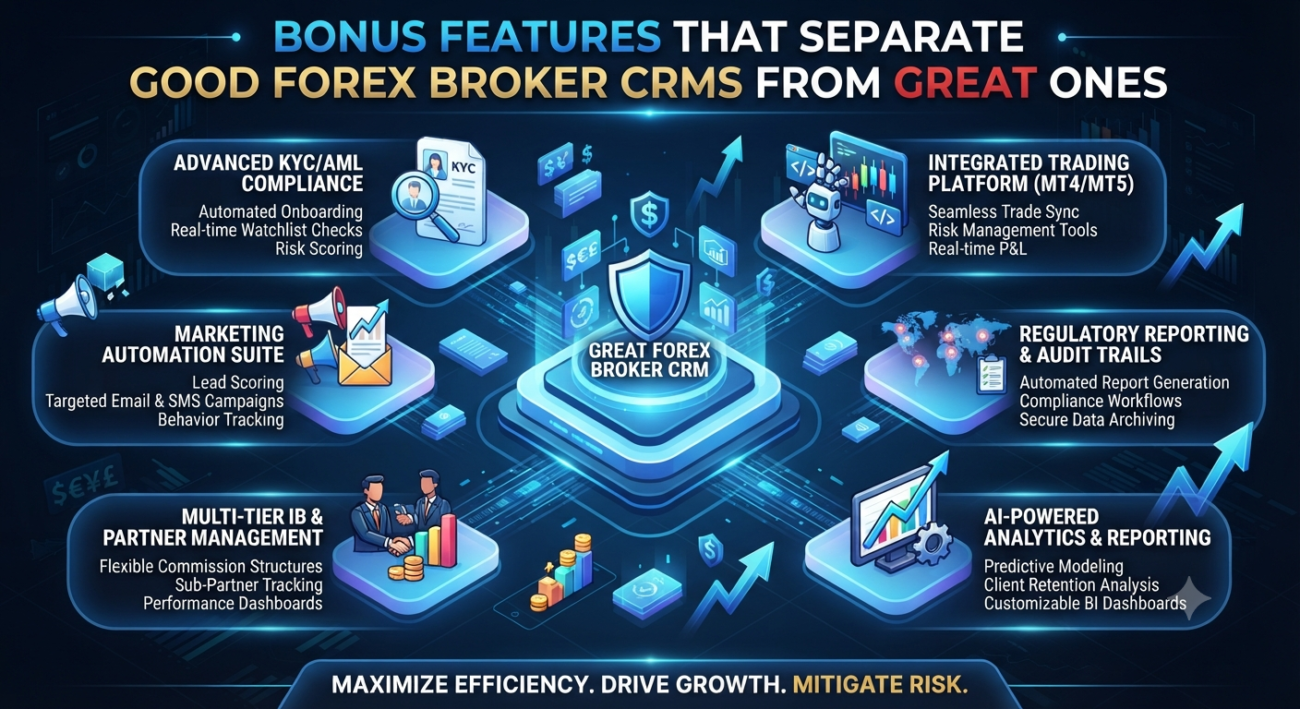
The ten features discussed earlier form the foundation of a modern Forex Broker CRM. However, enterprise brokerages often require additional capabilities that improve efficiency, strengthen security, and provide a competitive advantage.
If you’re evaluating CRM providers, these bonus features can help distinguish a basic platform from a truly enterprise-ready solution.
1. Built-in Client Portal
A self-service client portal enables traders to manage their accounts without contacting support.
Features may include:
- Profile management
- Document uploads
- Deposit and withdrawal requests
- Internal transfers
- Trading account management
- Wallet balances
- Support ticket submission
- Transaction history
- Referral tracking
- Downloadable account statements
A well-designed client portal reduces support requests while improving the overall customer experience.
2. White Label Management
Many brokerages operate multiple brands targeting different regions or market segments.
An enterprise CRM should support:
- Multiple brands
- Separate websites
- Individual client databases
- Brand-specific email templates
- Independent sales teams
- Separate reporting dashboards
This allows brokerages to manage several businesses from a single platform.
3. Built-in Customer Support Center
Integrated customer support simplifies communication by centralizing interactions across multiple channels.
Look for:
- Ticket management
- Live chat
- Email integration
- WhatsApp integration
- Call logging
- Conversation history
- SLA tracking
- Internal notes
Support teams gain complete visibility into each client’s history, enabling faster and more personalized assistance.
4. Marketing Automation
Marketing automation helps convert leads and re-engage inactive traders without manual effort.
Useful capabilities include:
- Email campaigns
- SMS campaigns
- Push notifications
- Drip sequences
- Behavioral triggers
- Audience segmentation
- Campaign analytics
- Landing page integration
Automated marketing improves lead nurturing and client retention.
5. Risk Management Dashboard
Although trading risk is typically handled by dedicated risk management systems, a CRM should provide operational visibility into client behavior.
Examples include:
- High-risk account alerts
- Large withdrawal monitoring
- Dormant client detection
- Trading activity summaries
- Deposit trends
- Suspicious behavior notifications
These insights support compliance and business decision-making.
6. Mobile CRM Access
Managers and sales teams often need access while traveling.
A responsive mobile interface should allow users to:
- View dashboards
- Manage leads
- Approve KYC requests
- Review support tickets
- Monitor deposits
- Receive real-time notifications
Mobile access helps teams respond quickly regardless of location.
7. Custom Dashboards
Different departments require different information.
An ideal CRM should let users personalize dashboards with widgets such as:
- Daily registrations
- Active traders
- Pending KYC cases
- Deposit volume
- Revenue metrics
- Support queues
- Sales pipeline
- Partner performance
Custom dashboards improve productivity by presenting the most relevant data at a glance.
8. Enterprise Security Features
Security should be a top priority when evaluating CRM software.
Look for:
- End-to-end encryption
- Two-factor authentication (2FA)
- Single Sign-On (SSO)
- IP whitelisting
- Role-based access control
- Session timeout
- Audit logs
- Automatic backups
- Disaster recovery
- GDPR-ready data handling
A secure CRM protects both client information and business operations.
Common Mistakes Brokers Make When Choosing a Forex Broker CRM
Selecting the wrong CRM can result in operational inefficiencies, expensive migrations, and missed growth opportunities. Below are some of the most common mistakes brokerages make during the selection process.
Choosing Based Only on Price
A low-cost CRM may reduce upfront expenses, but limited functionality can lead to higher long-term costs through manual work, third-party integrations, and reduced scalability.
Instead of focusing solely on price, evaluate the platform’s overall value, flexibility, and long-term return on investment.
Ignoring Scalability
Some CRM platforms perform well for small brokerages but struggle as client numbers increase.
Ask providers:
- How many active clients can the system support?
- Can it manage multiple brands?
- Does it support multiple offices?
- How does performance scale with higher trading volumes?
Selecting a scalable solution helps avoid disruptive migrations later.
Overlooking Integration Capabilities
A CRM should connect seamlessly with your existing technology stack.
Check compatibility with:
- MT4
- MT5
- cTrader
- Payment gateways
- KYC providers
- Marketing platforms
- Accounting software
- Customer support tools
Robust APIs make future integrations easier.
Ignoring Regulatory Requirements
Compliance should be built into the platform rather than added later.
Verify support for:
- KYC
- AML
- Audit logs
- Access controls
- Document management
- Regional compliance workflows
This reduces regulatory risk and simplifies audits.
Neglecting User Experience
A feature-rich CRM is only effective if employees can use it efficiently.
Evaluate:
- Dashboard usability
- Navigation
- Mobile responsiveness
- Search functionality
- Workflow customization
- Training resources
An intuitive interface improves adoption across departments.
Forex Broker CRM vs. Back Office Software
Many people use the terms Forex Broker CRM and Back Office Software interchangeably, but they are not identical.
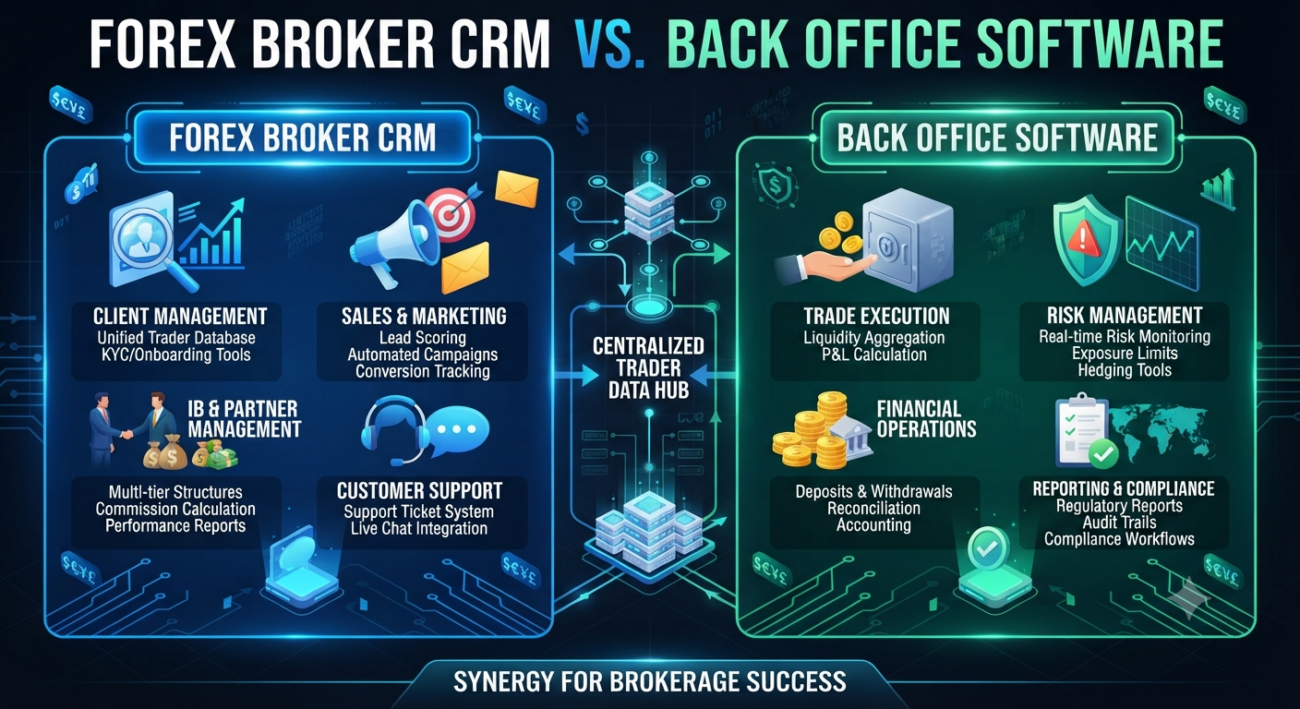
A Forex Broker CRM focuses on managing relationships with clients, prospects, partners, and internal teams. It supports sales, onboarding, communication, compliance, and client lifecycle management.
Back office software, on the other hand, is designed to handle the operational and administrative functions of a brokerage. It manages financial transactions, account administration, reconciliation, reporting, and internal processes.
While the two systems overlap in several areas, they serve different primary purposes.
Comparison Table
| Capability | Forex Broker CRM | Back Office Software |
| Lead Management | ✔ | Limited |
| Sales Pipeline | ✔ | ✖ |
| Client Communication | ✔ | Limited |
| KYC & AML | ✔ | ✔ |
| Trading Account Management | ✔ | ✔ |
| Payment Processing | ✔ | ✔ |
| Financial Reconciliation | Limited | ✔ |
| Executive Reporting | ✔ | ✔ |
| Employee Management | Limited | ✔ |
| Workflow Automation | ✔ | ✔ |
Which One Does Your Brokerage Need?
For most modern brokerages, the answer is both. An integrated solution that combines CRM and back office capabilities provides a unified platform for managing client relationships and internal operations, reducing data silos and improving efficiency.
How to Evaluate a Forex Broker CRM Before You Buy
Before signing a contract, conduct a structured evaluation to ensure the platform meets your current and future requirements.
Product Evaluation Checklist
Platform Capabilities
- Does the CRM support MT4 and MT5?
- Can it manage multiple brands?
- Does it include workflow automation?
- Is AI functionality available?
- Can workflows be customized?
Compliance
- Automated KYC verification
- AML screening
- Audit trails
- Document management
- Role-based permissions
Payments
- Multiple payment gateways
- Multi-currency wallets
- Automatic reconciliation
- Withdrawal approval workflows
- Transaction reporting
Security
- Two-factor authentication
- Encryption
- Backup and recovery
- IP restrictions
- Activity logs
Reporting
- Executive dashboards
- Sales analytics
- Financial reports
- Partner reports
- Custom report builder
Scalability
- API availability
- Cloud infrastructure
- Multi-office support
- High availability
- Future product roadmap
30-Point Forex Broker CRM Buyer’s Checklist
Use this checklist when comparing CRM providers.
| # | Question | Yes / No |
| 1 | Does it support MT4? | ☐ |
| 2 | Does it support MT5? | ☐ |
| 3 | Is KYC automated? | ☐ |
| 4 | Does it include AML screening? | ☐ |
| 5 | Is lead management included? | ☐ |
| 6 | Can workflows be automated? | ☐ |
| 7 | Does it support IB management? | ☐ |
| 8 | Is affiliate tracking available? | ☐ |
| 9 | Are payment gateways integrated? | ☐ |
| 10 | Is multi-currency supported? | ☐ |
| 11 | Does it support multiple languages? | ☐ |
| 12 | Can it manage multiple brands? | ☐ |
| 13 | Is there a client portal? | ☐ |
| 14 | Are dashboards customizable? | ☐ |
| 15 | Is API documentation available? | ☐ |
| 16 | Does it include reporting tools? | ☐ |
| 17 | Can reports be exported? | ☐ |
| 18 | Is role-based access available? | ☐ |
| 19 | Does it support 2FA? | ☐ |
| 20 | Are audit logs maintained? | ☐ |
| 21 | Is data encrypted? | ☐ |
| 22 | Are backups automated? | ☐ |
| 23 | Is disaster recovery included? | ☐ |
| 24 | Can new modules be added? | ☐ |
| 25 | Is mobile access supported? | ☐ |
| 26 | Is technical support available 24/7? | ☐ |
| 27 | Does the vendor provide onboarding assistance? | ☐ |
| 28 | Are software updates included? | ☐ |
| 29 | Is the pricing transparent? | ☐ |
| 30 | Can the CRM scale with future business growth? | ☐ |
Frequently Asked Questions (FAQs)
1. What is a Forex Broker CRM?
A Forex Broker CRM is specialized software designed for forex and CFD brokerages to manage client relationships, lead generation, onboarding, KYC verification, trading account management, payments, reporting, and partner programs from a single platform. Unlike a generic CRM, it is built specifically to support brokerage operations and integrate with trading platforms such as MT4 and MT5.
2. Why do forex brokers need a dedicated CRM?
A dedicated Forex Broker CRM helps automate repetitive tasks, streamline client onboarding, improve regulatory compliance, enhance communication, and provide real-time insights into business performance. It enables brokerages to operate more efficiently while delivering a better experience for both clients and internal teams.
3. Can a Forex Broker CRM integrate with MT4 and MT5?
Yes. Most modern Forex Broker CRM platforms support native integration with MT4 and MT5. This allows brokerages to automate trading account creation, synchronize balances and trading activity, manage client accounts, and reduce manual administrative work.
4. What is the difference between a Forex Broker CRM and a standard CRM?
A standard CRM focuses on sales and customer relationship management. A Forex Broker CRM includes industry-specific features such as KYC and AML compliance, trading platform integration, payment management, Introducing Broker (IB) management, affiliate tracking, and client portal functionality.
5. How does a CRM improve client onboarding?
A CRM automates the onboarding process by collecting client information, verifying identity documents, creating trading accounts, sending welcome emails, and tracking every step of the registration journey. This reduces delays and improves the overall client experience.
6. What compliance features should a Forex Broker CRM include?
A reliable CRM should include automated KYC verification, AML screening, sanctions checks, secure document storage, audit logs, risk scoring, approval workflows, and role-based access controls to help brokerages meet regulatory requirements.
7. Does a Forex Broker CRM support Introducing Brokers (IBs) and affiliates?
Yes. Most enterprise-grade CRM platforms provide dedicated modules for managing Introducing Brokers and affiliate partners. These features typically include referral tracking, commission management, performance reporting, and automated payouts.
8. Can a Forex Broker CRM automate deposits and withdrawals?
Yes. By integrating with payment gateways and digital wallets, a CRM can automate deposit confirmations, withdrawal requests, transaction notifications, and financial reconciliation, reducing manual processing and improving operational efficiency.
9. Is a Forex Broker CRM suitable for small brokerages?
Absolutely. Many CRM providers offer scalable solutions designed for startups as well as established brokerages. Choosing a platform that can grow with your business helps avoid costly migrations in the future.
10. How do I choose the best Forex Broker CRM?
Focus on your brokerage’s long-term needs rather than just the initial price. Evaluate features such as trading platform integration, compliance tools, automation, reporting, payment support, security, scalability, API availability, and the quality of customer support. A CRM should simplify operations today while remaining flexible enough to support future growth.
Final Thoughts
A successful forex brokerage depends on much more than competitive spreads or a powerful trading platform. Sustainable growth comes from delivering a smooth client experience, maintaining regulatory compliance, streamlining internal operations, and making informed business decisions.

A modern Forex Broker CRM brings all of these functions together into a single, integrated platform. From lead generation and client onboarding to payment processing, partner management, automation, analytics, and compliance, the right CRM becomes the operational backbone of your brokerage.
When evaluating different solutions, avoid choosing a platform based solely on cost. Instead, focus on how well it aligns with your business goals, integrates with your existing technology, and supports future expansion. A scalable, secure, and feature-rich CRM can reduce manual work, improve customer satisfaction, strengthen compliance, and position your brokerage for long-term success.
As the forex industry continues to evolve, technologies such as AI-powered automation, predictive analytics, and intelligent workflow management will play an increasingly important role. Investing in a future-ready Forex Broker CRM today will help your brokerage remain competitive, adaptable, and prepared for the opportunities of tomorrow.